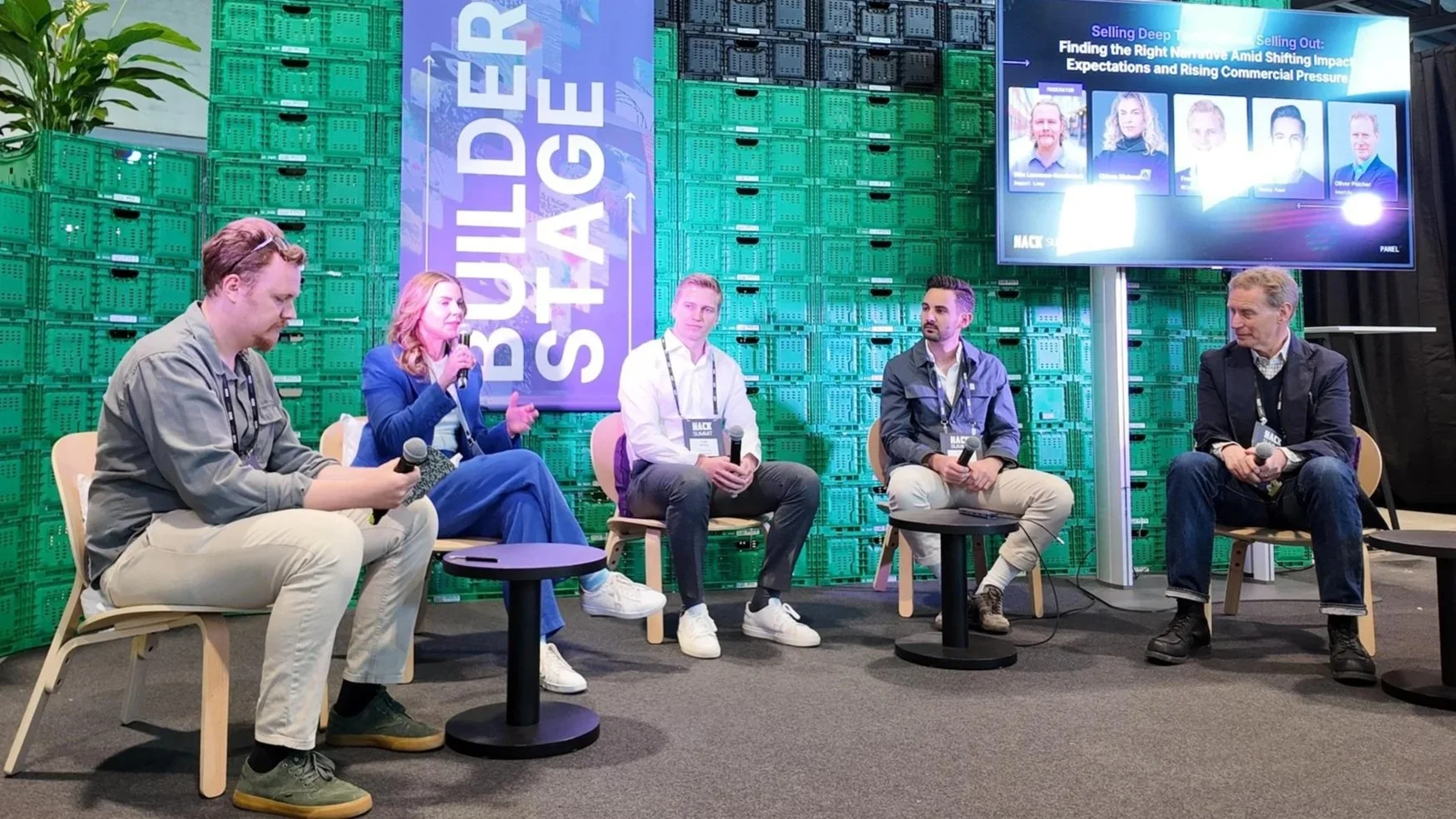
As expectations shift across capital markets and industry, deep-tech founders are being asked to communicate with more precision. Investors want evidence of traction and scale. Customers care about performance, reliability and real-world fit. At Hack Summit, EDERA joined a panel discussion that reinforced a challenge we see repeatedly in practice: strong technology is essential, but it rarely carries the story on its own.
Deep-tech founders are often told to simplify their story. In reality, the challenge is usually not simplicity. It is alignment.
A technically strong company may need to speak to investors, strategic partners, early customers, pilot partners, distributors, and industry stakeholders, often all within the same quarter. Each audience brings a different lens. Investors want to understand market size, defensibility, traction and the path to scale. Customers care about whether the solution works, whether it integrates into operations, whether it can be supplied reliably, and whether the economics will hold. Partners often sit somewhere in between.
That tension came through clearly in a recent panel discussion EDERA joined at Hack Summit alongside investor and founder voices, including Fred White, Co-Founder & CCO at DEScycle, and Oliver Polcher, CBO & Co-Founder at Seprify, both companies we know closely through our work.
What surfaced was not a new communications trend, but a familiar reality: strong technology still matters enormously, but it is no longer enough to carry the whole narrative.
A narrative shift the industry cannot ignore
One of the clearest themes in the discussion was that the language around sustainability and impact has shifted.
That does not mean sustainability has disappeared. It means it is no longer doing all the work by itself. The conversation is increasingly framed through resilience, sovereignty, industrial security, supply chains and commercial readiness. In practice, this creates a more demanding environment for founders. They cannot rely on broad impact language alone. They need to explain why the company matters commercially, now, in the context of a real market and a real industrial problem.
For many deep-tech companies, this is a useful (and necessary) correction. The difference now is that the market is asking them to prove that relevance earlier and more clearly.
Strong technology still needs a commercial story
Another point that came through strongly is that technical differentiation only becomes meaningful when it is connected to customer urgency.
From an investor perspective, better technology, better economics and faster adoption still sit at the centre of the story. A technology can be novel, patent-protected and scientifically impressive, but if founders cannot explain the problem it solves, who feels that pain most acutely, and why adoption is plausible in the near term, the story remains incomplete.
This is one of the most common messaging gaps we see in practice. Founders explain the breakthrough clearly, but spend less time explaining the buying logic around it. They speak fluently about technical performance, but less confidently about where the commercial pull will come from.
That is usually where positioning needs work. Not because the company lacks substance, but because the market needs a clearer bridge between the science and the commercial case.

Investor narrative and customer narrative are not identical
A useful distinction from the panel was that companies need one strong source of truth, but not one identical message for every audience.
Investors and customers often respond to very different signals. Investors may focus on growth trajectory, market capture and scalability. Customers are usually more interested in performance, reliability, implementation risk, and whether the company can deliver consistently in a live context. A founder who over-indexes on big growth language may lose credibility with buyers. A founder who stays too technical or too cautious may make it harder for investors to see the scale of the opportunity.
The answer is not to build multiple disconnected narratives. It is to create one coherent positioning foundation and adapt the emphasis depending on who is in front of you. The strategic discipline lies in keeping the core story intact while changing the proof points, tone and level of detail.
Narrative is not static
One of the points raised on the panel, and one we often see with clients, is that narrative is sometimes treated as a one-off exercise.
A founder workshop happens. Messaging is agreed. The website is updated. Then the company moves on.
But deep-tech communication does not stand still, because the company itself does not stand still. A business may be entering different application markets, building early traction, running pilots, signing distribution agreements, launching products, or proving a route to cost parity. Each of those milestones changes how the company should be read by the market.
That is why communication strategy matters just as much as positioning. A good narrative is not only a headline. It is a system for communicating progress over time.
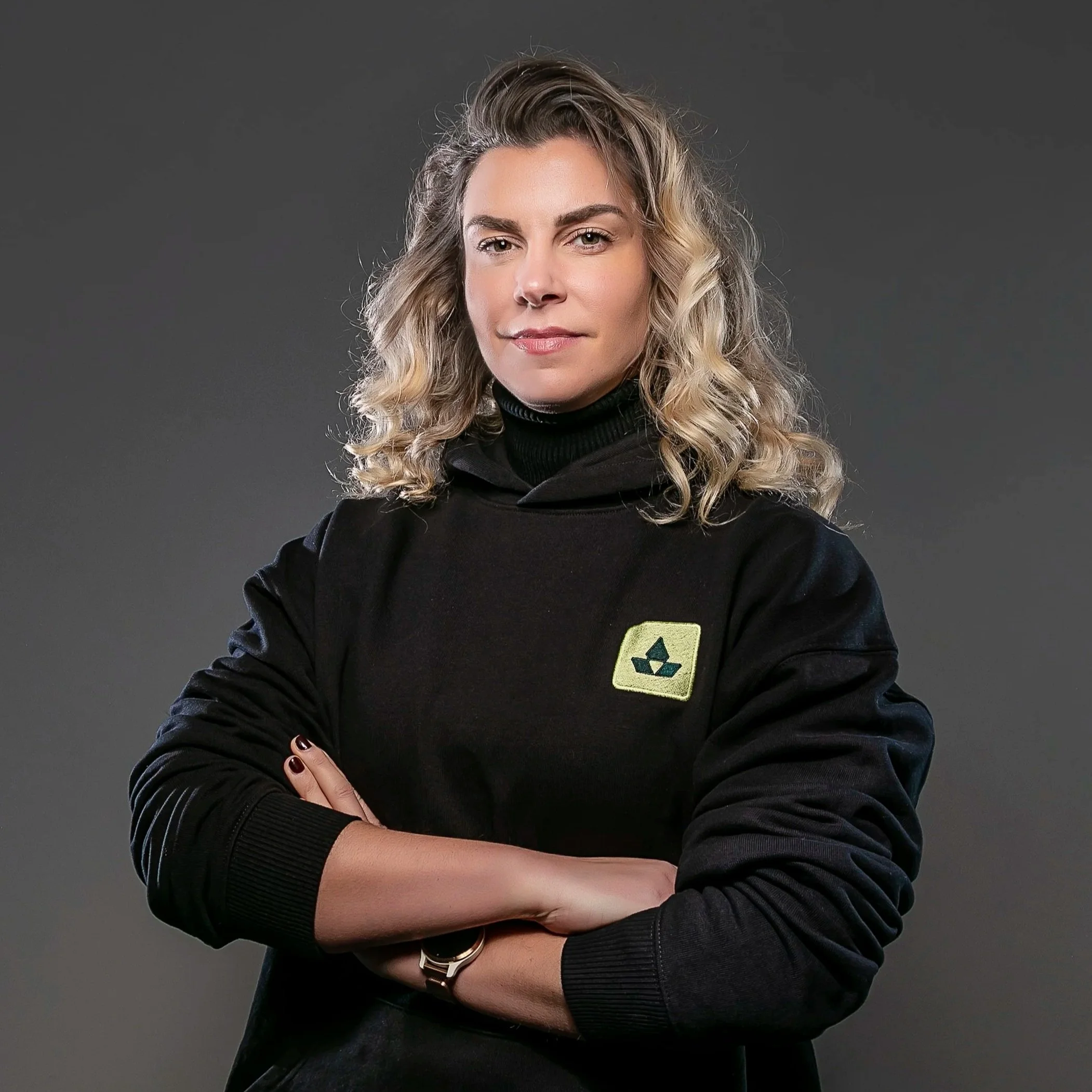
As EDERA Lab co-founder Chiara Molena noted:
“When developing narratives and messaging, it’s important to recognise that terms like ‘Climate Tech’ and ‘Deep Tech’ often matter far more to investors and start-ups than they do to customers.
Once a Deep Tech company enters an application market, it needs to behave and communicate in ways that align with that market’s expectations. Buyers in food, personal care, or metals are not looking for ‘Deep Tech suppliers’ or ‘Climate Tech suppliers’.
They evaluate suppliers through the lens of their own industry and the tangible value those solutions bring to their business.”
Credibility comes from visible momentum and technoeconomic solidity
Another important takeaway is that traction needs to be visible, not just internally meaningful.
Founders often assume that if the company is moving in the right direction, the market will eventually recognise it. In reality, investors, customers and partners read momentum through external signals. Partnerships, pilots, product launches, distribution wins, milestones in validation, and signs of repeatability all contribute to credibility.
This matters especially in deep tech, where timelines are longer and the path to scale can look less familiar than in software. Communication is part of how a company shortens that credibility gap. Done well, it helps the market understand not only what is being built, but how the company is progressing towards adoption.
The right time to invest in communications
A final point from the discussion is worth underlining. There is such a thing as investing too early in communications.
If a company is still deep in technical validation, broad visibility may not yet be the priority. But once there is a beachhead market, early customer pull, or meaningful commercial proof points, communications becomes much more strategic. At that stage, the question is no longer whether the technology is interesting. It is whether the business is credible, relevant and adoptable at scale.
For deep-tech founders, that is often the real turning point. The job is not to make the company sound bigger than it is. It is to make the company legible to the market.
That means connecting technical depth to commercial reality, and building a narrative that can hold across investors, customers and partners alike. That is where positioning starts to do real work, and where we see the strongest deep-tech communications begin.
EDERA Lab is a specialist marketing and communications partner for deep-tech and industrial innovation companies. We support founders and technical teams with positioning, PR, thought leadership and marketing strategy to help turn complex innovation into credible market traction. Get in touch.