Circular metals is no longer a sustainability story. Founders, update the pitch.
The conversation around critical minerals has moved to resilience and industrial security. The companies that win the next decade will be the ones that can talk about their work in those terms.

For most of the last decade, founders building circular metals companies have led with the same story. Lower emissions. Closed loops. A more sustainable industrial future. It was a fine pitch when the audience was a sustainability-curious VC or a procurement team with an ESG box to tick.
That audience is no longer the one that matters most.
Across Europe and the UK, the conversation around metals and minerals has shifted decisively. Policymakers, off-takers, defence primes, manufacturers and the investors who back them are no longer asking the sustainability question first. They're asking the resilience question. Where does this material come from? Can we rely on it? What happens if Beijing or Jakarta change the rules tomorrow?
Founders who are still leading with carbon are answering a question that's slipped down the priority list. The opportunity now is to lead with the answer to the question that's actually being asked.
Policy has redefined circular metals as industrial strategy
The policy backdrop has done much of the work for you.
The EU's Critical Raw Materials Act sets concrete targets for extraction, processing and recycling, and pairs them with rules on recycled content, recovery efficiency and how value is retained inside European supply chains. The UK's Critical Minerals Strategy points in the same direction, with a particular focus on midstream capability - the processing and refining gap that makes the rest of the chain fragile.
This is not a sustainability framework dressed up in a different language. It's an industrial strategy. The starting assumption is that critical minerals underpin everything from energy systems and advanced manufacturing to AI hardware, quantum and defence, and that depending on a handful of foreign suppliers for those inputs is a strategic vulnerability the West can no longer afford. Circularity is one of the few levers governments can pull to fix that domestically. That's why it's being funded, regulated and politically prioritized.
For founders, the implication is simple. Your work has been redefined as industrial policy. Talk about it that way.
The commercial reality is harder than the headline
Below the policy, the commercial picture is more complicated than it looks.
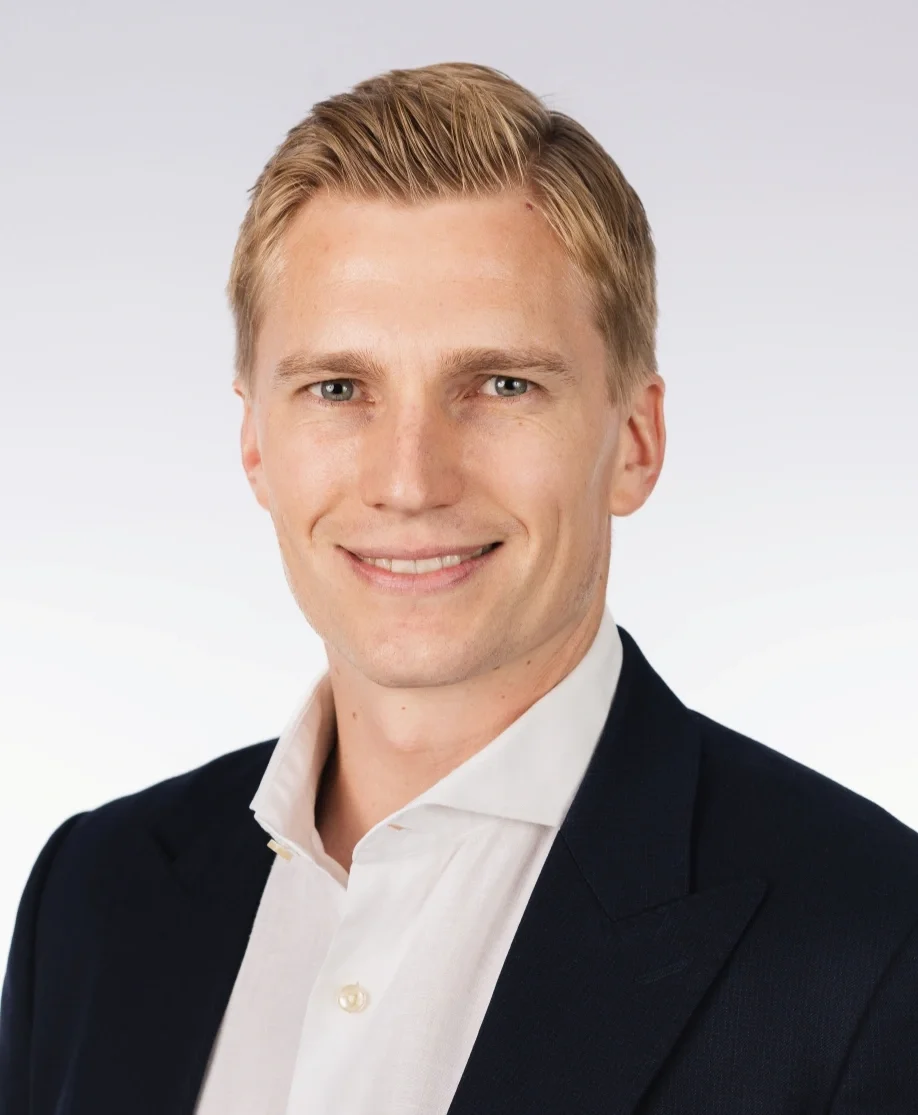
Markets for recovered metals have existed for years. The constraint sits upstream. As Fred White, Chief Commercial Officer at DEScycle, puts it: "The key commercial risk for businesses is often upstream. Securing consistent, reliable access to feedstock is what determines whether a recycling model can operate at scale or not."
This is the bit that often gets lost in the founder pitch. A circular metals business is not really being judged on whether the chemistry works. It's being judged on whether the feedstock will keep coming, whether the off-take will keep flowing, and whether the operation can be relied on by industrial partners who plan in years and decades, not quarters.
Different audiences want different proof points. Feedstock suppliers care about price, payment terms and reliability. Off-takers want volume, specification and consistency. Industrial partners are looking for supply security, traceability and long-term alignment. Investors want evidence that the risk has been taken out, not added in. None of this is unusual for an industrial business. What's unusual is how often the founder narrative ignores most of it.
There's also a more subtle point worth making about traction itself. Not all of it is created equal. A signed pilot with a smaller player is useful, but it's rarely what moves a major corporation to act. What moves a major corporation is the prospect of one of its direct competitors getting there first. Visible engagement with a peer of your target customer tends to be more strategically valuable than several relationships with smaller players combined. That should change how you sequence your business development and how you talk publicly about who you're working with.
Traceability has moved from nice-to-have to infrastructure
The other shift worth naming explicitly is around traceability. Digital product passports, chain-of-custody systems and certification frameworks are becoming infrastructure, not a marketing layer.
The point worth holding onto is that recovery is the thing a circular metals business does, but it isn't the thing the buyer is paying for. The buyer is paying for material they can put into a supply chain with confidence - properly traced, properly certified, cleanly integrated into their existing processes and reporting. That's a meaningfully different value proposition, and most founder decks treat the two as if they were the same thing.
It's also worth being honest about where the requirement actually came from. Traceability didn't emerge as a core feature because founders thought it would be useful. It emerged because buyers said so - when founders bothered to ask properly, and not just at the investment-team level. The richer answers tend to come from the sustainability and operations leads who live with the procurement and compliance problems every day. The most valuable conversations a founder has in this market aren't the ones where they pitch. They're the ones where they listen and let what they hear shape what they build.

Three shifts in how to talk about the work
So what does all of this mean for how founders should be communicating?
There are three shifts worth making, and they cost nothing to make tomorrow morning.
The first is to lead with risk reduction, not impact. The most commercially serious framing of circularity available right now is that it provides alternative supply, gives buyers visibility over material flows, supports compliance with incoming regulation, and increases control over inputs the business cannot afford to lose. That is the language of a CFO and a head of procurement. Use it.
The second is to talk about the system, not just the technology. The opportunity in critical metals doesn't sit at any single point in the chain - it spans processing, refining, traceability, coordination and long-term offtake. Founders who can articulate where they sit in that system and which other players they connect to are far more credible than those describing their unit economics in isolation.
The third is to treat policy as part of the story, not the backdrop. Industrial strategy is the reason the market exists in its current shape. Saying so explicitly tells partners and investors that you understand the world you're actually operating in.
The pitch needs to match the moment
None of this asks founders to abandon the sustainability case. The carbon and circularity benefits are real, and they remain useful, particularly with European regulators and the buyers downstream of them. But sustainability has become the floor, not the ceiling. Resilience, sovereignty and operational reliability are what's being procured.
The companies that will define the next phase of this industry are the ones whose communications match the moment. They'll position themselves not as a cleaner alternative, but as critical infrastructure for an industrial base that has decided it can't afford to outsource its inputs anymore.
One practical note on how to get there. The voices most worth listening to as you sharpen the story are the ones actually operating in your target sector - the recyclers, the metallurgists, the procurement leads, the corporate sustainability teams. Generic startup advice imported from software or consumer rarely transfers cleanly to industrial markets where sales cycles run in years and buyers plan in decades. Weigh the operators over the outsiders when they tell you whether the message is landing.
If you're building in this space, the question worth sitting with is an uncomfortable one. If a defence prime, a German automaker and a UK government department all read your website tomorrow, would any of them come away thinking you understood their problem?
If the answer isn't an obvious yes, the pitch needs work.
EDERA Lab is a marketing and communications partner for deep tech and industrial innovation companies, with experience across advanced materials, metals technology and circular materials; explore EDERA Lab’s work in circular metal innovation, or get in touch.